
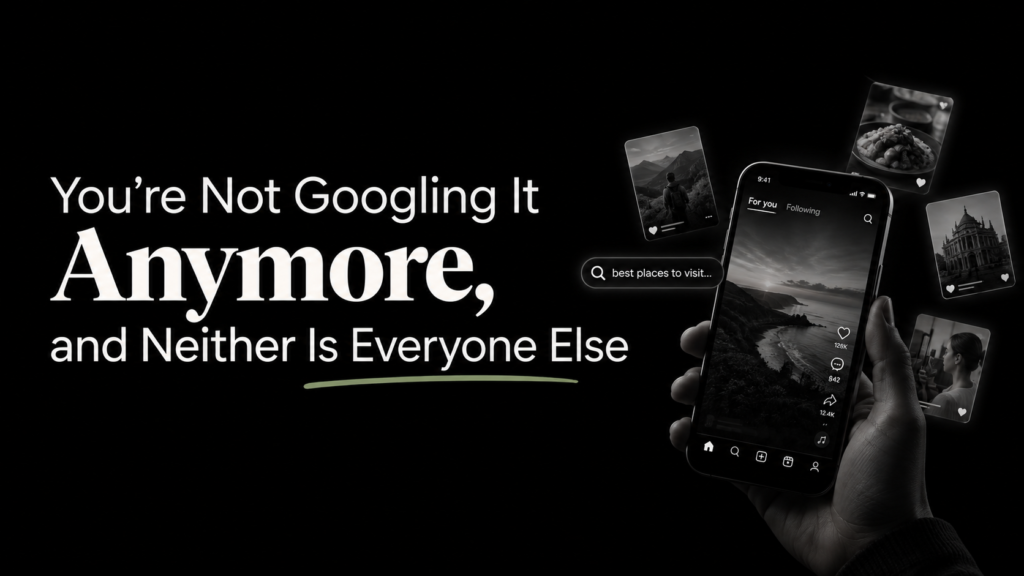
You're Not Googling It Anymore, and Neither Is Everyone Else
Think about the last time you wanted a restaurant recommendation. Did you open Google and type “best restaurant near me,” or did you open Instagram and scroll through a few Reels until one looked good enough to screenshot?
If you’re being honest, it was probably the second one.
This small shift in behavior, happening quietly in millions of pockets every day, has a name now: social search. And if you’re a business owner, marketer, recruiter, or anyone building a brand online, understanding it isn’t optional anymore. It’s the difference between showing up where your audience actually looks and shouting into a room they already left.
What Is Social Search?
Social search is simply what happens when people use platforms like Instagram, TikTok, YouTube, Pinterest, and LinkedIn to find answers instead of relying only on traditional search engines.
It looks different depending on what someone’s after. A restaurant tip comes from TikTok. Travel ideas come from a Pinterest board or a YouTube vlog. A quick marketing lesson comes from a LinkedIn carousel. A fashion trend spreads through Reels before it ever reaches a blog. Product reviews increasingly come from a person talking into a camera, not a paragraph on a website.
None of this happened by accident. People got tired of reading. They wanted to see, hear, and feel whether something was actually worth their time, and video does that faster than text ever could.
Why This Shift Actually Matters
Here’s the honest truth: people don’t wake up wanting a list of ten blue links anymore. They want proof. They want to watch someone use the product, hear someone’s real opinion, see the place before they book it.
A fifteen second video showing exactly how something works often does more convincing than a full page of product specs. That’s not laziness on the audience’s part. It’s just a faster, more human way to decide.
For brands and creators, this opens a door that used to be closed. You’re no longer just competing for likes and views. You’re competing to be the answer someone finds the moment they’re actually looking for something.
Every Piece of Content Is a Potential Answer
Here’s a mindset shift worth sitting with: your content isn’t just content anymore. It’s a potential answer to someone’s exact question, if you frame it that way.
Compare these two captions:
“Another day, another adventure”
versus
“Best places to visit in Kerala during monsoon season”
The first one is nice. The second one is findable. It tells the platform and the person scrolling exactly what they’re looking at and exactly why it matters to them right now. This is the quiet overlap between SEO thinking and content creation, and it’s becoming impossible to ignore.
How This Changes the Way You Should Be Creating
Chasing likes and views got a lot of brands this far. Getting discovered on purpose requires a slightly different approach. A few things worth building into your routine:
Let keywords show up naturally.
Not stuffed, just present, in your captions, video titles, on-screen text, hashtags, and even the words you actually say out loud in a video. Platforms are listening more than people realize.
Build content around real questions, not guesses.
Instead of asking “what should I post today,” try asking “what is my audience actually typing into a search bar right now.” Things like how to build a content calendar, simple SEO tips, or ideas for growing a personal brand make far better content than a vague daily update ever will.
Pay attention to intent, not just topic.
Someone asking “what is SEO” wants a beginner explanation. Someone comparing “best SEO tools” is already shopping around. Someone searching “SEO agency near me” is close to making a decision. Speaking to the wrong stage loses the person entirely, even if your content is technically good.
Why People Trust Creators More Than Ads
There’s a reason creators have become such a central part of discovery. People trust people. An ad tells you a product is good. A real person showing you how they actually use it convinces you in a completely different way.
This has quietly created new opportunities for brands willing to collaborate with creators instead of only running polished campaigns, while also building their own steady library of searchable, useful content over time.
Social Search Doesn't Replace Google, It Joins It
None of this means traditional search is disappearing. It just means the journey got longer and more layered.
A realistic path today might look like this: someone spots a brand on Instagram, watches a review on YouTube, searches the brand name on Google to double check, visits the website, skims a few reviews, and finally makes the purchase.
That’s not one moment of discovery. That’s a chain of small trust-building moments happening across different platforms, and marketers who only think in single-channel terms are missing most of that chain.
What This Actually Means for You
If you’re managing a brand’s presence right now, the takeaway isn’t complicated, even if it takes real work to apply. It means understanding how your specific audience searches, creating content that’s genuinely useful instead of just polished, using keywords in a way that feels natural rather than forced, and showing up consistently across the platforms your audience already trusts.
Most importantly, it means letting go of the idea that social media is only a feed to post into. It’s becoming a search engine in its own right, one built on trust, video, and real people instead of just algorithms and blue links.
Where This Is All Heading
Discovery is only getting more visual, more conversational, and more driven by real creators rather than polished corporate messaging. People will keep splitting their attention between traditional search, social platforms, communities, and increasingly, AI-powered tools that pull answers from all of it at once.
The businesses that win from here won’t just be the ones creating the most content. They’ll be the ones creating content people can actually find when it matters, not content that simply gets scrolled past on the way to something else.
Being visible was the old goal. Being discoverable, in the right place, at the right moment, with the right message, is the one that actually matters now.
Want more breakdowns like this one? Follow along on anandmm.com for regular posts on where digital marketing is actually heading, not just where it’s been.